

West Coast Region: Maritime Heritage
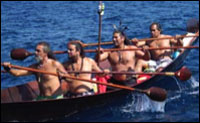
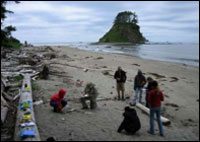
The West Coast Region seeks to support research into human connections to the sea that include indigenous native cultures, seafaring traditions and the discovery and protection of maritime heritage resources. Today indigenous people continue their seafaring cultural activities that include building traditional watercraft and traversing sanctuary waters. Maritime heritage resources such as shipwrecks, and those objects which remain in place to remind us of historic activities such as lighthouses, historic wharves, docks and piers, populate the coastline from the State of Washington to California.
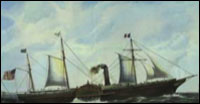
For hundreds of years, mariners transiting this region have been faced with prevailing winds, extreme weather conditions and natural hazards. Early maritime activities resulted in many ships running aground or sinking within the dangerous cold waters off the West Coast of North America, leaving us today with hundreds of historic shipwrecks, some recorded and many still to be discovered. These wrecks reveal the diverse range of activities and nationalities that traversed the coastal maritime trade routes and are time-capsules of our Nation's seafaring past. They include vessels engaged in various trades such as the California Gold-Rush, passenger and cargo, lumber, international coal and grain, fisheries, military and island commerce to name a few.
This rich maritime heritage stands as a testament to the cultural importance and historic value in the region. As of 2021, a total of 110 heritage sites have been discovered and documented in the region. Potential and documented submerged heritage sites for West Coast national marine sanctuaries include: Olympic Coast - 200, Greater Farallones - 415, Monterey Bay - 405, Channel Islands - 200, and Cordell Bank - 1.
Heritage resources also include military aircraft lost in the region. A key mandate of the Office of National Marine Sanctuaries is to explore, assess and protect submerged archaeological heritage resources and to share expedition discoveries with the public. Expeditions in the region include the exploration of the dirigible USS Macon in Monterey Bay National Marine Sanctuary. The 785-foot airship, along with four Sparrowhawk biplanes, went down off Point Sur in 1935. On February 12, 2010, commemorating the 75th anniversary of the sinking of the airship, the Monterey Bay National Marine Sanctuary announced the USS Macon listing on the National Register of Historic Places.
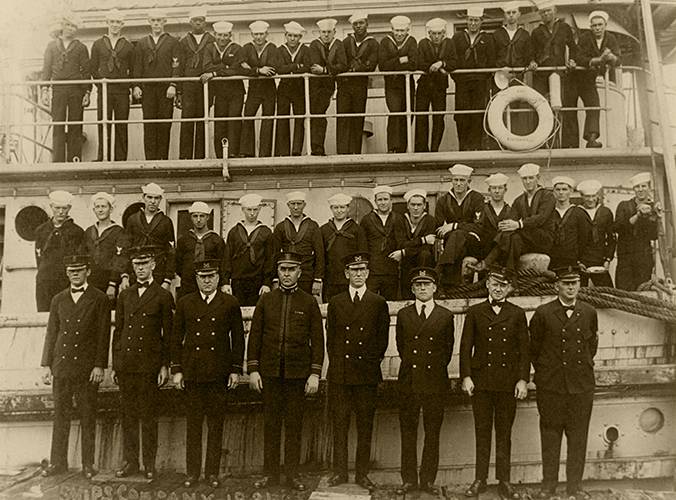
There are many human stories associated with shipwrecks in the region. One of the most notable is the USS Conestoga, its crew of 56 U.S. Navy sailors paid the ultimate sacrifice in service to their country. On March 25, 1921, USS Conestoga left Mare Island Naval Yard, California for Pearl Harbor, Hawaii, and was expected to arrive safely at port on April 5. The vessel vanished and was officially declared lost with all crew on June 30, 1921. For years Conestoga and its crew lived on solely in the hearts and minds of the loved ones left behind, but in September 2014, during an expedition with NOAA Office of National Marine Sanctuaries Maritime Heritage Program in Greater Farallones National Marine Sanctuary, an unknown wreck was discovered, and later confirmed in 2015 to be the final resting place of USS Conestoga. Recognized as one of the top maritime unsolved mysteries in U.S. Naval history, and considered an important relic representing America's past as a seafaring nation, the wreck is federally protected under the National Marine Sanctuaries Act and the Sunken Military Craft Act. To learn more about the history and discovery of the USS Conestoga visit Earth Is Blue: Three Miles from Safety: The Story of the USS Conestoga.