

Ocean for Life
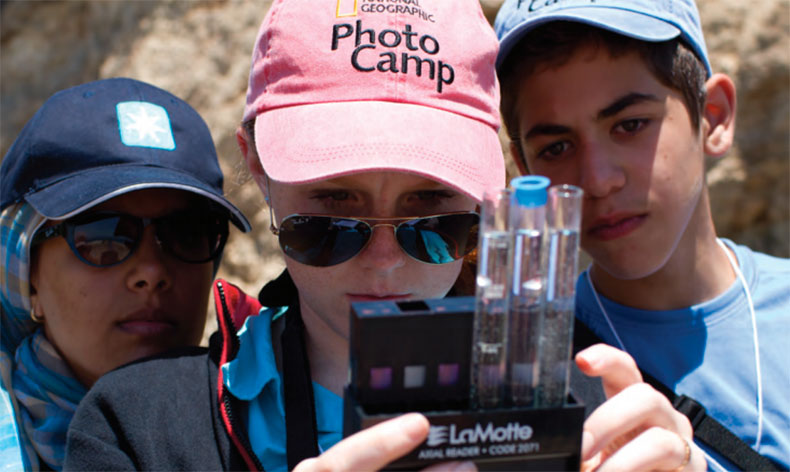
At this time it is undetermined when the next Ocean for Life field study will take place.
Ocean for Life is an international ocean science and cultural exchange program created to inspire a more peaceful world, dawning from the tragic events of September 11, 2001. This unique program brings together high school students of diverse backgrounds to foster cross-cultural relationships, explore marine science, and develop a stewardship ethic for the ocean. Selected students use America's national marine sanctuaries as living classrooms, where they discover how one ocean connects us all and how, by connecting to the ocean, we enrich our lives together.
Download Evaluation Summary Reports from the Ocean for Life program. Click the photo to download the PDF file.
 |
 |
 |
| 2009 Evaluation Summary (PDF, 5MB) | 2011 Evaluation Summary (PDF, 23MB) | 2013 Evaluation Summary (PDF, 2.1MB) |
At this time it is undetermined when the next Ocean for Life field study will take place. If you are interested in contributing to this life-changing program for teenagers, please visit the National Marine Sanctuary Foundation's website for sponsorship. To prepare for the future, visit the following page that highlights Eligibility Requirements and Participant Benefits.
View the Ocean for Life Youth Media Projects
Articles about the Ocean for Life program
Ocean for Life brings together students of diverse backgrounds and cultures to discover marine science, conservation, and how the ocean connects us all. NOAA's national marine sanctuaries provide the optimal setting for this unique opportunity to enhance cross-cultural relationships, while creating a stewardship ethic for the ocean and the universal human experience.
On September 11, 2001, three sixth grade students, their teachers and two National Geographic staff boarded a flight in Washington, DC bound for a week of exploration and discovery in the Channel Islands National Marine Sanctuary. They never reached California. They were aboard American Airlines flight 77 when it was hijacked and hit the Pentagon at 9:37 am.
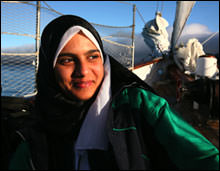
In honor of the three young students and all of the lives lost on that significant day in our Nation's history, an inspiring program was created, called Ocean for Life that promotes cultural understanding and acceptance in the context that we are one world connected by one ocean.
The Ocean for Life program is designed around three main themes: a sense of place, interconnectedness and ocean conservation and stewardship. These themes are highlighted through activities focusing on ocean science and exploration, cultural exchanges, and youth media projects.
Main Themes
Through Ocean for Life we seek to establish cultural connections that ultimately lead to better understanding and the strengthening of our global relationships. The main themes of Ocean for Life are: a sense of place, interconnectedness, and ocean conservation and stewardship.

A Sense of Place
Developing a sense of place stimulates curiosity about the world and its diverse inhabitants and habitats. Students will explore the fascinating ocean and coastal areas found within the national marine sanctuaries and draw comparisons with their own unique local and regional environments.
Interconnectedness
Understanding the connections between Earth's physical and human systems is fundamental to comprehending one's own place in the world. Ocean for Life participants will learn about the interconnectedness of the world's ocean and understand that their local actions impact the ocean, no matter where they live. Students will also learn about the interconnectedness of people around the globe.
Ocean Conservation and Stewardship
Raising awareness of the importance of resources in the ocean, the current issues facing those resources, the research being done to address those issues, and the role of marine sanctuaries in protecting those resources are all part of the ocean conservation and stewardship theme, introduced through the context of the National Marine Sanctuary System.
For more information about the Ocean for Life program, please contact:
Claire Fackler
NOAA Office of National Marine Sanctuaries
Ocean Science Education Building 514
Santa Barbara, CA 93106-6155
Phone 805-893-6429
Email Claire.Fackler@noaa.gov
For information about sponsorship of the Ocean for Life Program, please contact:
Allison Alexander
National Marine Sanctuary Foundation
8601 Georgia Avenue, Suite 501
Silver Spring, MD 20910
Phone 301-608-3040 ext. 3
Email Allison@marinesanctuary.org
The Ocean for Life program is a partnership between the National Oceanic and Atmospheric Administration's Office of National Marine Sanctuaries, The GLOBE (Global Learning and Observations to Benefit the Environment) Program and the National Marine Sanctuary Foundation. It is presented in collaboration with Jean-Michel Cousteau's Ocean Futures Society and American University's Center for Environmental Filmmaking.
