

Olympic Coast
National Marine Sanctuary
Olympic Coast National Marine Sanctuary is one of the nation's most treasured ocean areas. It is home to a rich abundance of marine mammals, seabirds, and fish, as well as thriving invertebrate communities and diverse populations of kelp and intertidal algae. The high productivity of this region has supported humans since time immemorial. The cultures of four Coastal Treaty Tribes—Hoh Tribe, Makah Tribe, Quileute Tribe, and Quinault Indian Nation—have forged inseparable ties to the marine environment.
Learn more about Olympic Coast National Marine Sanctuary at olympiccoast.noaa.gov.

Quick Facts
Location: From Cape Flattery to the mouth of the Copalis River, on Washington's outer coast
Protected Area: Approximately 3,188 square miles
Designation: July 1994
Habitats:
- Beaches
- Rocky shores & offshore islands
- Kelp forests & rocky reefs
- Sandy seafloor
- Open ocean
- Deep sea
Key Species:
- Dungeness crab
- Northern sea otter
- Ochre sea star
- Orca (killer) whale
- Razor clam
- Salmon and steelhead
Sanctuary Highlight

Studying Southern Resident Killer Whales in Olympic Coast National Marine Sanctuary
Did you know that one of the Pacific Northwest's most iconic marine mammals—the endangered Southern Resident killer whale—is shifting its summer home waters? Once most often seen in the Salish Sea around the San Juan Islands, these whales have increasingly been spotted further west near the mouth of the Strait of Juan de Fuca in Olympic Coast National Marine Sanctuary.
Multimedia
Our Planet is an Ocean Planet: Earth Is Blue.
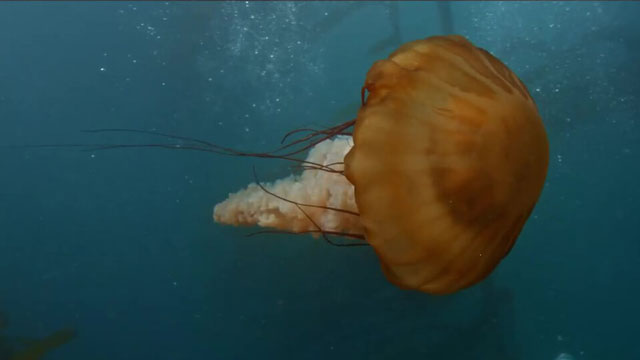
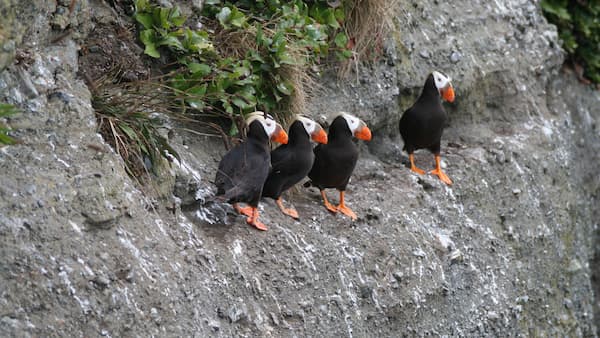
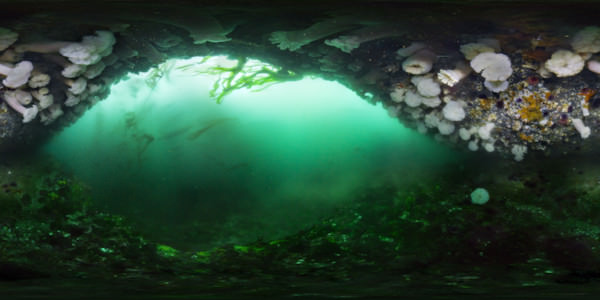
No matter where you are, the ocean and Great Lakes are in your hands. We hope these images and videos from Olympic Coast National Marine Sanctuary inspire you to help care for our ocean and to spread the word that Earth isn't green—it's blue.



National Marine Sanctuary System
Safeguarding America's Premier Marine Places
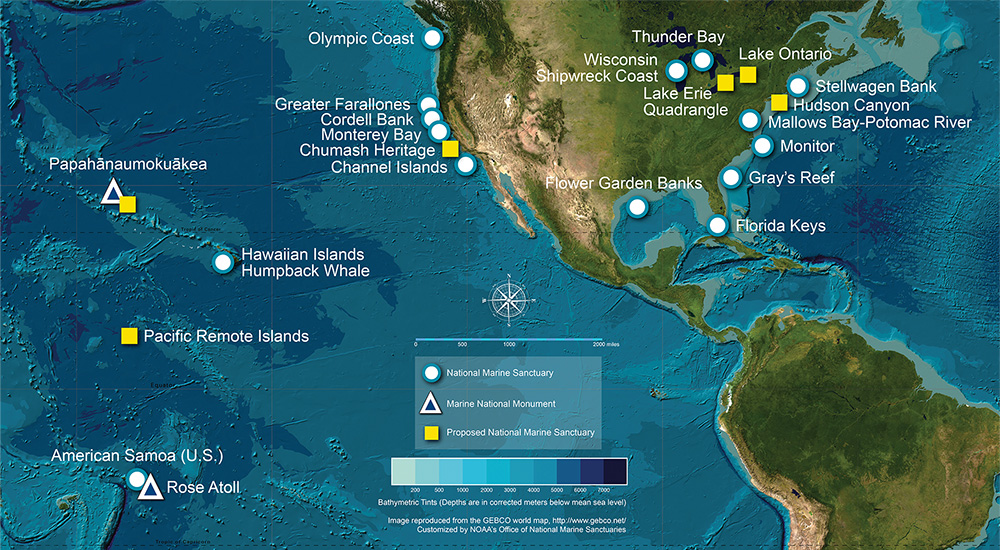
From Washington state to the Gulf of America and from the Great Lakes to the Pacific Islands, the National Marine Sanctuary System protects 18 underwater parks spanning over 629,000 square miles of ocean and Great Lakes waters. By investing in innovative solutions, we strengthen these iconic places to address 21st-century challenges while supporting America's commerce and tourism. These unique locations inspire people to visit, value, and steward our nation’s iconic ocean and Great Lakes waters.