

Discover Life Between the Tides
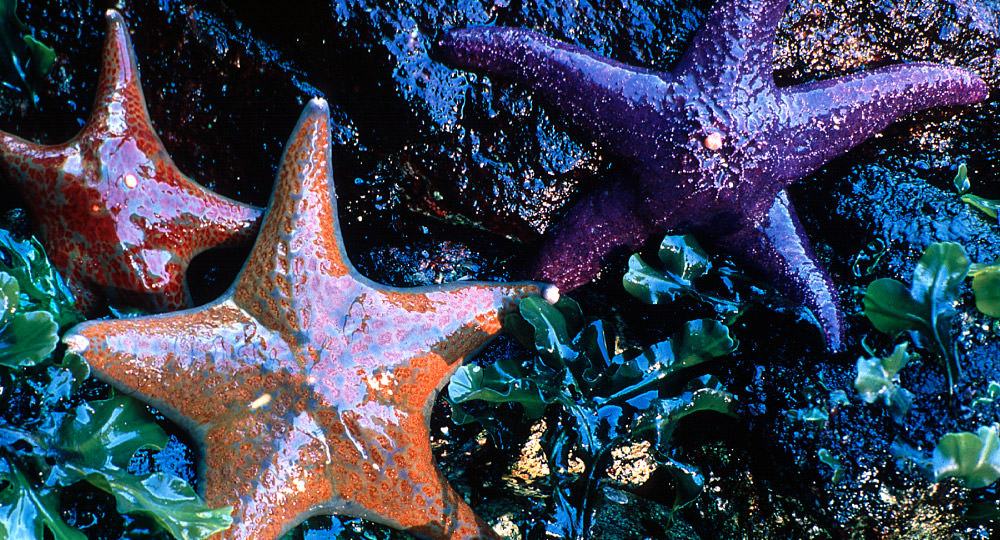
When the tide recedes, a hidden world is revealed. Tidepools are natural windows into the intertidal zone—places where sea stars, anemones, crabs, snails, chitons, algae, and other marine life thrive in shallow pools left behind by the ocean. Exploring these areas offers a close-up look at the diversity and resilience of life in your national marine sanctuaries.
The dramatic influence of a l tidal cycle exposes intertidal invertebrates and algae to large fluctuations in temperature, desiccation (drying out), and wave action throughout a single day.
Use NOAA's tides and currents map tool to look up information on local tides from NOAA stations.
Tidepooling Tips
Follow these tips for a safe and responsible tidepooling experience:

Step Carefully
Avoid crushing the animals and algae.

Stay Alert
Watch for waves and slippery surfaces.

Look Closely
Quietly observe, you will see more.

Be Gentle
Touch lightly so you don't disturb sea life.

Leave Them Be
Leave the animals, algae, rocks, and shells where you find them. Remember that these animals breathe underwater.

Know Regulations
Know local and federal regulations that protect intertidal species and habitats.
Explore Tidepools in These National Marine Sanctuaries
West Coast Sanctuaries (Prime Tidepooling Sites)
These sites feature some of the richest and most accessible intertidal habitats in the nation:
- Olympic Coast National Marine Sanctuary (WA) – Explore Shi Shi Beach, Second Beach, Hole-in-the-Wall (near Rialto), and Kalaloch for colorful tidepools filled with sea stars, anemones, and limpets.
- Greater Farallones National Marine Sanctuary (CA) – Visit Duxbury Reef near Bolinas or the rocky shores of Point Reyes to see ochre stars, turban snails, and mussel beds.
- Chumash Heritage National Marine Sanctuary (CA) – Rugged Central California shorelines near Cambria, Morro Bay, and Montaña de Oro reveal colorful tidepools filled with sea stars, anemones, and nudibranchs at low tide.
- Monterey Bay National Marine Sanctuary (CA) – Natural Bridges State Beach, Point Piños, and Fitzgerald Marine Reserve showcase thriving tidepools teeming with crabs, limpets, nudibranchs, and anemones.
- Channel Islands National Marine Sanctuary (CA) – Discover pristine intertidal life on Santa Cruz and Santa Rosa Islands, where clear waters reveal sea stars, urchins, crabs, and so much more.
Tropical and Subtropical Sanctuaries (Limestone and Lava Tidepools)
Warm-water sanctuaries also offer unique tidepooling experiences shaped by coral, limestone, and volcanic rock:
- Florida Keys National Marine Sanctuary (FL) – Shallow limestone flats and exposed fossil coral near historic sites, such as near the old Overseas Railroad bridges, reveal chitons, nerites, juvenile fish, and sponges during low tide.
- Hawaiian Islands Humpback Whale National Marine Sanctuary (HI) – Volcanic shorelines on Maui, Oʻahu, and Hawaiʻi Island reveal small lava rock tidepools where visitors can spot crabs, urchins, and juvenile reef fish at low tide.